Economic Wing of the Commonwealth
Workers Cooperative Federation
Building the democratic economy from the base unit of the singular cooperative to regional, national, and sectoral federations governed by recallable delegates with no wage privileges.
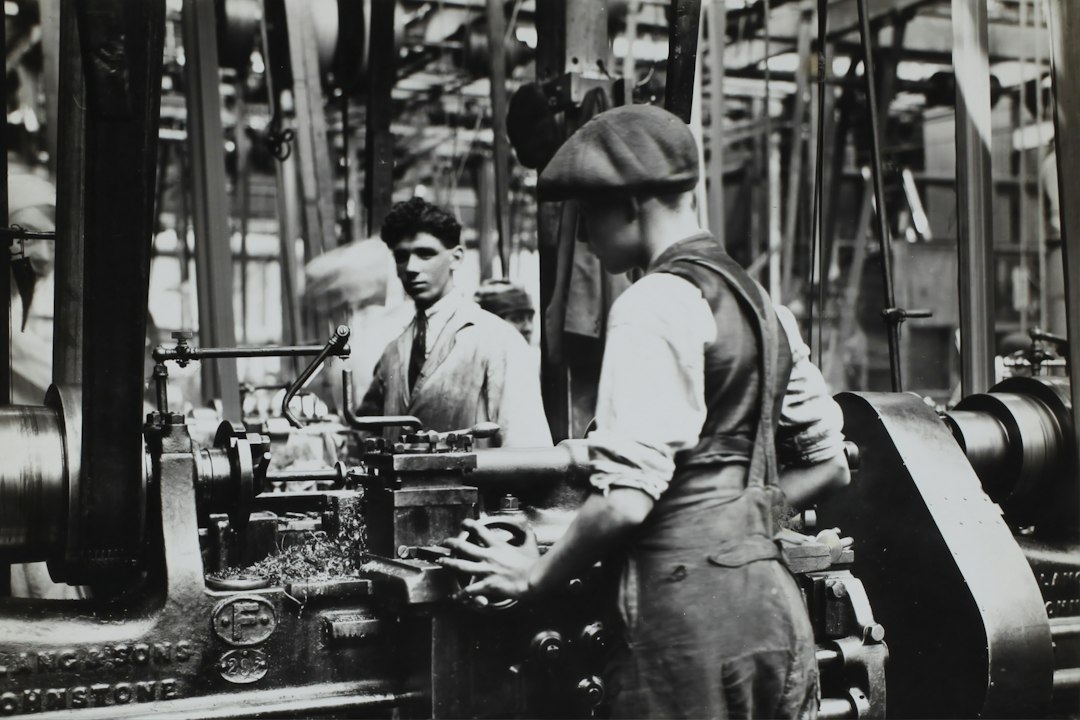
Base Unit of Commonwealth
Sovereign Worker Council
Structure of the Singular Cooperative
Every enterprise begins with the Worker Council as the supreme decision-making body of the workplace.
In contrast to corporate hierarchies where management holds dictatorial power, the cooperative base unit operates on absolute worker sovereignty. The full Worker Council meets routinely to establish broad economic goals, determine working conditions, and elect delegates to handle day-to-day coordination.
Core Rules for Elected Operational Delegates:
- ✔ Imperative Mandates: Delegates only execute the explicit decisions and priorities set by the Worker Council.
- ✔ Immediate Right of Recall: The assembly can remove and replace any operational delegate at any time by vote.
- ✔ Zero Wage Bonuses: Delegates receive equal worker compensation; no managerial bonuses, stock schemes, or executive privileges exist.
Federation Commitments: Split of Surplus
To prevent cooperative isolation, capital accumulation, or market degeneration, all affiliated cooperatives bind themselves to the equal four-way split of economic surplus.
Mandatory Reinvestment
Retained directly inside the enterprise for equipment maintenance, technological modernization, safety upgrades, and collective workplace reserves.
Council Fund
Transferred to the local neighborhood & regional worker council to fund civic infrastructure, community centers, municipal childcare, and local mutual defense.
Federal Investment Fund
Contributed to the nationwide Commonwealth treasury to launch new cooperatives, convert failing capitalist businesses, and finance heavy strategic industries.
Social Contributions
Directly allocated to universal healthcare provisions, disability pensions, mutual aid solidarity clinics, free education, and cooperative cultural institutes.
The Economics of Federal Cooperatism
How coordinated socialist federation achieves superior industrial resilience, eliminates capitalist extraction, and directs all productivity gains toward lowering living costs and reducing work hours.
Eliminating Capitalist Extraction Across Chains
In capitalist conglomerates—such as Hyundai—massive efficiency and ultra-low consumer pricing are achieved by owning the entire vertical chain: from manufacturing their own steel (Hyundai Steel) to assembling vehicles (Hyundai Motor) and operating their own cargo fleets (Hyundai Glovis). Every step avoids third-party profit gouging.
Federal Cooperatism applies this logic for the working class: By vertically linking primary extraction, fabrication, logistics, and retail syndicates, no cooperative pays a parasitic capitalist middleman. Horizontally, cooperatives in the same sector pool equipment, warehousing, and testing facilities to eliminate redundant waste.
Vertical Integration (Mine to Table)
Raw agrarian harvests flow into cooperative processing mills, transport syndicates, and municipal consumer grocers at cost. The cost-of-production pricing replaces monopolistic commodity inflation.
Horizontal Integration (Solidarity Networks)
Rather than fighting one another for market share, regional machine shops or farm syndicates share bulk purchasing contracts, maintenance depots, and open-source industrial tooling.
Massive Economies of Scale
Isolated worker cooperatives struggle against capitalist cartels. When hundreds of cooperatives federate their demand, they negotiate national-scale wholesale discounts and operate high-capacity automated machinery that no single workshop could afford alone.
Lowering Prices & Shortening the Working Week
Under capitalism, automation and efficiency produce layoffs, wage cuts, and shareholder dividends. Under Federal Cooperatism, efficiency liberates human time and lowers living costs.
Whenever the Federation achieves cost savings through automation, bulk supply, or vertical integration, those economic gains are systematically applied in two fundamental directions:
1. De-Commodifying Essentials
Productivity windfalls directly lower the retail prices of staple food, electricity, medicines, and housing across the Commonwealth until essentials become free at the point of use.
2. Shorter Hours, Full Guaranteed Pay
When machinery cuts required labor time by 20%, the working day is reduced from 8 hours to 6.4 hours—with zero reduction in compensation. Workers retain full wages while gaining more leisure, study, and family time.
Establishing an Alternate Financial Sector
Capitalist banks systematically starve worker-owned enterprises of credit, demanding equity stakes, speculative returns, or management concessions. The Commonwealth establishes a completely sovereign, worker-controlled financial ecosystem.
- ✔ Zero-Interest Mutual Credit: Inter-cooperative clearing houses settle debts without usury or private transaction fees.
- ✔ Worker Credit Unions & Depositories: Worker wages and cooperative reserves circulate within our own financial system, starving Wall Street and City speculators of labor-created liquidity.
- ✔ De-Commodified Capital: Capital is treated strictly as an administrative accounting tool for allocating societal labor, never as a self-replicating financial commodity.
Breaking Free from Speculative Wall Street
The Federation acts as its own investment bank, insurer, and venture development syndicate.
By maintaining collective financial circuits, surplus from high-yield industrial cooperatives automatically insulates seasonal agricultural collectives during bad harvests and funds conversion capital to buy out retiring owners of small-and-medium private firms.
In-Depth Analysis: The 25% Surplus Split Formula
Every penny of surplus is scientifically balanced between workplace modernization, local communal prosperity, movement expansion, and social well-being.
25% Mandatory Reinvestment
Internal BaseEconomic & Organizational Benefits:
- Continuous Capital Modernization: Guarantees the cooperative never lags behind in machinery, robotics, tooling, and clean energy tech.
- Counter-Cyclical Workplace Buffer: Protects worker remuneration during economic downturns, material shortages, or seasonal drops in demand without layoffs.
- Safe & Dignified Working Conditions: Workers directly vote this budget into ventilation, ergonomics, and safety infrastructure rather than cutting corners for dividends.
25% Council Fund
Local BaseEconomic & Organizational Benefits:
- Anchor in the Community: Bridges the workplace to the broader neighborhood assembly, preventing "worker capitalism" or parochial self-interest.
- Public Civic Amenities: Finances neighborhood childcare, communal parks, municipal laundries, and local clean transit that directly lowers living costs for all families.
- Direct Municipal Control: Neighborhood assemblies prioritize funding for localized food distribution, municipal heating grids, and emergency disaster relief.
25% Federal Investment Fund
Macro ExpansionEconomic & Organizational Benefits:
- Horizontal Territory Expansion: Supplies massive patient capital to launch sister cooperatives in key strategic supply chain sectors (steel, microchips, freight).
- Emergency Rescue Fund: Acquires private enterprises entering bankruptcy, preserving worker livelihoods by instantly converting them to democratic federated cooperatives.
- Cross-Regional Equilibrium: Transfers resources from highly mechanized urban industrial sectors to developing rural agrarian regions, ending rural-urban inequality.
25% Social Contributions
Human FloureshingEconomic & Organizational Benefits:
- De-commodification of Life: Directly subsidizes free preventative healthcare clinics, comprehensive disability safety nets, and eldercare institutes.
- Workers' Vanguard Education: Funds tuition-free technical apprenticeships, labor history libraries, and democratic administration training for every worker.
- Cultural Emancipation: Finances working-class theater, music halls, sports syndicates, and holiday retreats, transforming leisure into a shared common right.
How Cooperatives Form the Federation
Rather than creating a top-down bureaucratic state, power federates upward from the workplace through recallable delegate assemblies structured across two interlocking axes: geographic and sectoral.
Axis A: Geographic Federation (Councils & Committees)
Local District Committees
Elected delegates from municipal cooperatives meet in district economic committees. They coordinate local warehouse logistics, trade exchanges, shared equipment, and precinct worker welfare.
Regional Federation Councils
District delegates federate at the regional level to administer larger regional infrastructure, inter-district transport arteries, regional supply stability, and emergency solidarity mutual reserves.
National Federal Congress
The highest coordination body of the Commonwealth. Delegates from all regions unite to establish macroeconomic production balances, federal capital distribution, and foreign cooperative agreements.
Axis B: Sectoral Federation (Industry-Wide Coordination)
Agrarian & Food Guilds
Connecting farms, silos, food processors, and urban distributing shops into an unbroken network guaranteeing zero food waste and fair labor across harvests.
Manufacturing & Engineering
Machine shops, toolmakers, and fabrication cooperatives coordinating raw materials, technical blueprints, open patents, and production schedules without competitive sabotage.
Housing, Transport & Care
Uniting construction teams, freight rail syndicates, software workers, and health clinics to ensure basic human needs are universal public rights rather than market commodities.
Preventing Bureaucracy & Careerism
To ensure that delegates remain true servants of the working class, our constitution institutes strict barriers against managerial degeneration and career politicians.
Strict Imperative Mandates
Delegates cannot vote their personal preferences; they vote strictly on the positions instructed by their base worker council.
Immediate Recallability
Any council or committee delegate who violates mandates is instantly recalled by majority vote of the constituent workers.
Equal Remuneration & Zero Bonuses
No operational delegate or committee coordinator receives pay above the standard worker wage, completely extinguishing financial motives for power.

Build the Cooperative Commonwealth
Join the Federation of Worker Cooperatives today. Adopt democratic workplace governance, benefit from collective federation solidarity, and eliminate wage exploitation.